|
|
Beyond Privilege: Andrea De Sica on Children of the Night
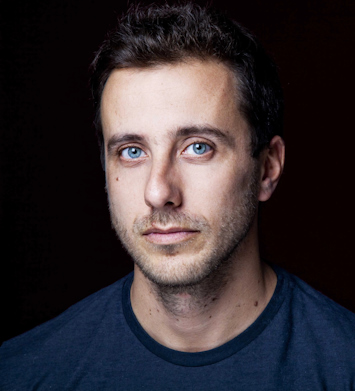
With his debut feature Children of the Night, director Andrea De Sica steps out from the considerable shadow of his legendary grandfather Vittorio De Sica to forge his own cinematic path. In this candid conversation, De Sica discusses his artistic choices, cinematic influences, and the complex burden of carrying one of cinema's most revered names.
Your debut film focuses on privileged youth rather than the marginalized classes typically depicted in Italian cinema. What drew you to this choice?
This was deeply personal for me. I come from a good family, attended the best schools in Rome, and I wanted to approach the reality I knew best. Usually when Italian cinema depicts rich kids, there's this cold judgment, this perspective that makes them unpleasant. I wanted to be as sincere as possible, to empathize with these characters because ultimately this is a film about friendship. Since this reality is close to me, I don't have preconceptions—I haven't constructed a vision from a distance.
The film blends realism with almost fantastical, lyrical elements. How did you arrive at this stylistic approach?
The film started from a very realistic basis. I have people dear to me who've been in boarding school recently—they had heated minds, were quite unbridled, and lived with life-and-death intensity. I visited these schools, met teachers, observed their daily routines. But I felt that taking a purely sociological approach would have been limiting. Instead of reproducing a real school, I chose a grand hotel in the mountains—this metaphysical feeling of being outside the world where I could invent a universe. I prefer inventing to reproducing what I've seen.
|