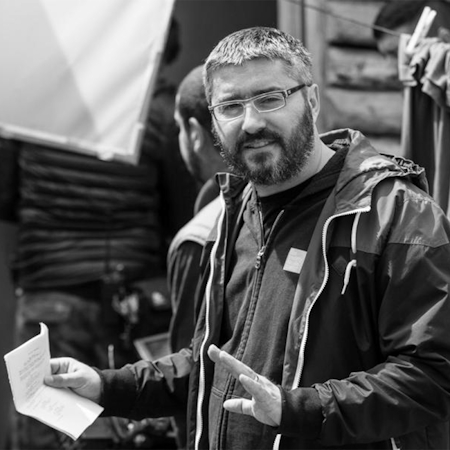
Romanian Director Marian Crisan Reimagines Classic Literature in Murder Inn


Marian_Crisan_1.jpg


Romanian Director Marian Crisan Reimagines Classic Literature in Murder Inn


Director Marian Crisan's latest film Murder Inn brings a 19th-century Romanian novella into contemporary times, transforming Ioan Slavici's Moara cu Noroc (The Lucky Mill) into what he calls a minimalist thriller set against the backdrop of Transylvania's forests and illegal logging operations.

Your film Murder Inn premiered at the Black Nights Film Festival in Tallinn. How did international audiences respond to this adaptation of Romanian literature?
What's interesting is that the story works universally, even for audiences unfamiliar with Slavici's original work. They perceived it as a suspense film, a story of tension. What really caught their attention was the backdrop of illegal deforestation in Romania, which has received some international press coverage. The human relationships Slavici created in 1850 are eternal because they're rooted in emotion. It's about a family in crisis, which anyone can understand.

What drew you to adapt this particular novella?
I've had a connection with this story since high school when I first read it. I was attracted to the atmosphere, the visual quality. Between my previous films Morgen and Rocker, I returned to the book and started reimagining it. I asked myself: what would this family look like today? Why would they run a mountain lodge now? The writing process took about two years, and I constantly rewatched Victor Iliu's 1955 classic film adaptation, which is a masterpiece. That was a challenge, to honor that classic.


You've updated the story significantly. In the original, bandits rob a carriage. What's your modern equivalent?
We turned it into a car accident, a vehicle that fell into a ravine. It was quite a heavy sequence to film. I also changed the ending, which I'm not sure Slavici would thank me for if he were alive today.

Why do you consistently set your films in Transylvania?
I feel at home there. I'm still connected to this place and I resonate with the temperament of the people. It's another angle from which you can see Romania. I feel I can be honest and true, that I can speak from the heart there. We filmed mostly in Băișoara in the Apuseni Mountains, around the Turda Gorge, using as much of the natural mountain landscape as possible.

Romanian cinema is often labeled minimalist. How does that affect making a thriller?
Sometimes minimalism isn't just an artistic choice, it's also about production realities. You don't always have resources to make cinema other than minimalist cinema. This is a thriller without explosions and serial killers, something more suited to our context. We also lack a tradition of genre literature in Romania, particularly thriller literature that could support cinema. But there's a loyal, consolidated audience for Romanian film that has grown over the past decade.


Return to Murder Inn