|
|
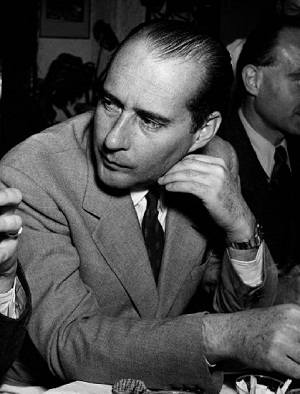
The Last Utopia (La Dernière utopie: la télévision selon Rossellini, 2005) Director: Jean-Louis Comolli Presentation: At the peak of his popularity, Italian director Roberto Rosellini decided to undertake a passion project unlike anything that had been done before. His story is told in the documentary, The Last Utopia. Jean-Louis Comolli was so fascinated by Rossellini's decision to abandon the world of major motion pictures that he created this documentary to tell his story. "During the early 60s, Roberto Rossellini was the most famous Italian filmmakers - he was considered as the inventor of neo-realism and the icon of modern cinema. He decided to turn away from fiction and film directing to devote himself to what he called "a new mission for the cinema". He wanted to unite the forces of cinema and television, through a cycle of movies and shows, a vast, an immense program dealing with all the human endeavors from the era of the caves until the conquest of space, through the invention of arts and techniques (from 7,000 BC to the present: age iron, Renaissance, industrialization ...). The project (huge: over 60 hours, half made between 1963 and 1974) is linked explicitly to the encyclopedic ambitions of the Age of Enlightenment. Rossellini seeks to establish nothing less than a new humanism: he wanted to give to the people of his era - at least those which goes to movies and or watch TV - their history and, through it, the sense of their lives, to learn how to think about the world and their condition, to regain capacity to imagine and to regain the desire to know, to be curious. There is a political dimension in the project which is again consumption alienation and advertising alienation (...) The filmmaker trusted that people are able to understand the world through their eyes and by listening: he trusted the cinema powers to show how humanity lived before, how they spoke, moved, ate, wear, etc… To film humanity in their era gave us a large amount of information immediately understood by the viewer, regardless of its education. The movie wanted to learn the viewer how to "really see", to "see by himself (...)" It is for me the opportunity to make the viewer sensitive to Rossellini’s project. This is the main point of the Rossellini’s utopia: to suppose that viewers want to learn, viewers are curious, are open minded, they want to find out things about the world, about the science, but especially, the viewers are capable of experiencing film sensations and emotion. This viewer has existed and still exists." From Jean-Louis Comolli’s draft for The Last Utopia, February 2005 Synopsis: In the 1960's, Italian director Roberto Rossellini turned away from the 'classic' film industry for an ambitious television program. The director wanted to show how to think about the world, about our condition, our history. Extracts, radio interviews and stories of co-workers show how television seen by Rossellini was the continuation of the work undertaken since his movie: Rome, Open City. |