|
|
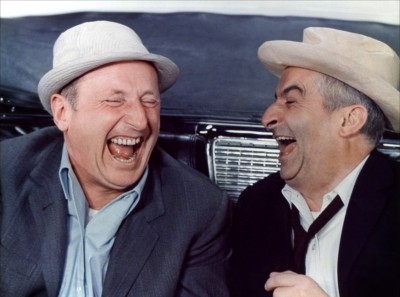
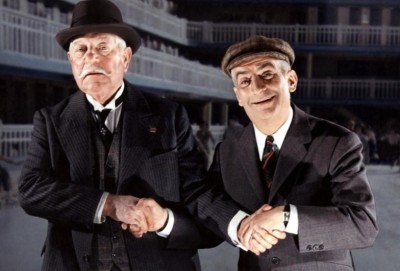
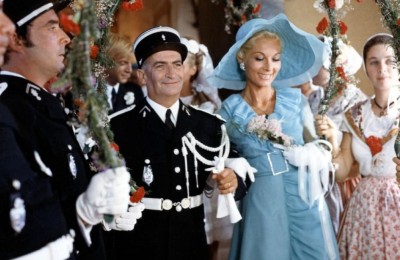
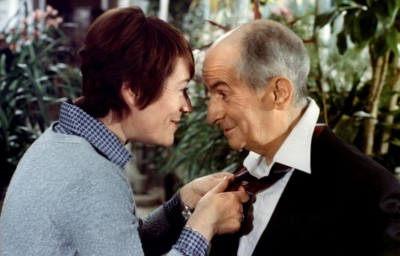
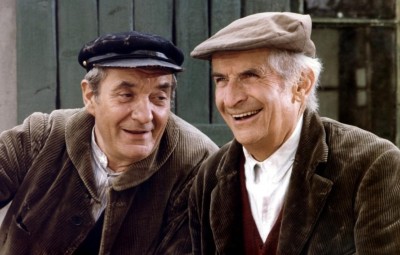
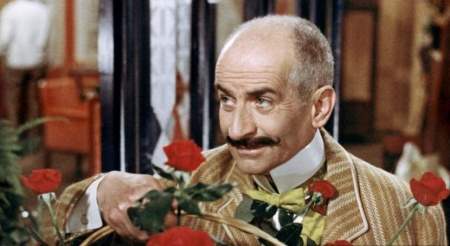
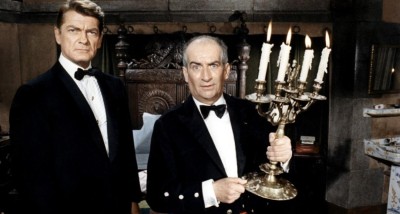
{rokbox thumb=|images/watch_promo_2.png|}http://www.youtube.com/watch?v=gSsu4b2oDAU{/rokbox} Louis de Funès - Intime (2007) Director: Serge Korber Presentation: Born in 1914 into a family with Spanish roots, Louis de Funès found his mother to be his first comedy teacher. Her crises and angers fuelled the comic talent of the child. In 1940, Louis de Funès was discharged from his military service because he was accidentally misdiagnosed with cancer. His brother Charles was sent to the battle front where he was struck and killed by a German machine gun. After short careers as a designer or window dresser, Louis de Funès moved toward comedy. For almost twenty years, he only played an extra or a supporting role in French films, shooting with the greatest directors of the era: Sacha Guitry, Claude Autant-Lara, Gilles Grangier and Yves Robert. “I opened and closed many doors.” he later admitted. He perfected his art in each film and tried to make each role memorable. He also did voice acting for some movies; he was the French voice of the Italian comedy star Toto. Still, his comedic talents were not enough to meet his family’s needs. To make ends meet, he worked nights as a jazz pianist at Pigalle’s cabarets in Paris. However, Louis de Funès was not able to read sheet music. His ear for music enabled him to memorize songs so he could play them again from memory. At the age of 50 and following the success of the play Oscar, he became essential in films. By 1964, he had three huge successes: The Sucker, The Gendarme of Saint-Tropez and Fantômas. After having only small parts in movies, he became an actor that could not be ignored anymore. He worked with great actors of the era but this time, as an equal. Some stars with a faltering career, like Jean Marais (Fantômas) or Jean Gabin (The Tattooed One) found it difficult to accept the new star status of Louis de Funès. On the other hand, he developed a true complicity with the actor Bourvil. Together, they filmed The Sucker with Gérard Oury, a financial gamble at the time. For the first time, a comedy was given a huge budget. Before this, comedies were a sub-genre of French cinema. Back then, all comedies were shot in black & white and filmed in indoor studios. The Sucker was shot in color and entirely filmed on location in France and in Italy. Analysts were predicting a complete failure for this big-budget comedy but the film was a triumph. The new comedy duo captivated French audiences with their undeniable talent. Louis de Funès and Bourvil got to share only few scenes together in the movie. Gérard Oury thought up a new project where Louis de Funès and Bourvil would be onscreen together for the entire film: Don't Look Now: We're Being Shot At. Again, the project was risky. Gérard Oury wished to make a comedy about the Nazi occupation. The topic was still taboo because it had only been 20 years since World War Two. The film proved to be a huge success and kept the record until 2008 as being the French movie with the most viewers in theaters with over 17 million tickets sold. In The Mad Adventures of Rabbi Jacob, Gérad Oury chose another risky topic, religion, but this film was equally successful. Despite a controversial release during the Yom Kippur War, the public came running to watch Louis de Funès as a rabbi. Despite his popular success, critics had a dig at Louis de Funès. The French film magazine, Les Cahiers du Cinéma even described Don't Look Now: We're Being Shot At as "the most pathetic movie of the year." Naturally worried and anxious, Louis de Funès was hurt by the papers. He decided not to read any reviews of his films. He asked his wife and his two children, Patrick and Olivier, to remove the arts section of his newspaper whenever he received it. To his great displeasure, Louis de Funès never received recognition from his peers. He was only awarded by the American actor Jerry Lee Lewis in 1980 with an Honorary César. Louis de Funès was only concerned with his audience. He dressed up and went anonymously to watch his own films because he was paid attention to the technical details of the film and was relieved by the laughter of the audience. Following the audience reaction during a preview showing, he organized a revival of the musical The One Man Band just some days before the film’s official release. Louis de Funès enjoyed working with his family. His wife, Jeanne, became his agent and negotiated all his contracts. He performed five times with his son Olivier in the films Fantomas Strikes Back, The Big Restaurant, Hibernatus, The Exchange Student, Perched on a Tree and The One Man Band. His son finally abandoned comedy to become an airline pilot. Louis de Funès became the highest-paid European star. He also became the only actor to make a Soviet audience laugh. More than 25 years after his death, Louis de Funès is still extremely popular in Russia. For the first time, an actor succeeded in having his name appear first in the credits of his films. In some aspects, Louis de Funès was the opposite of a star. He tried to lead a simple life. He left Paris and avoided fancy dinners in town. “I am a disaster at those dinners,” he said frankly. He rarely gave interviews; he relishes nothing more than taking care of his garden in his castle in Clermont, in the quiet French country. He began organic farming before anybody else. He installed a projector where he watched his old favourites such as Charlie Chaplin, Buster Keaton and Laurel & Hardy. In the small village of Cellier, he became known as a quiet and generous man. He never missed Mass on Sundays. The actor worked a lot. Louis de Funès shot 14 movies between 1965 and 1970, all of which were huge successes. Because of this popularity, some cinemas in France were exclusively offering Louis de Funès movies in all their rooms. Audiences adored him. Besides his films, Louis de Funès also returned to the theatre with a revival of Oscar and followed with The Waltz of Toreadors. The amount of work he put on himself led to certain issues. Between each scene in The Waltz of the Toreadors, he had to lie down at while trying desperately to pause for breath before going back onstage. He gave everything to his audience, even his own health. His physical condition did not improve. After two heart attacks in 1975, Louis de Funès was restricted to a diet and forced to rest. Theatre was now forbidden to him. Insurance companies were not able to insure a shoot with him anymore. Everybody thought his career was over. Producer Christian Fechner managed to bring Louis de Funès back for a movie under unusual conditions. There was an ambulance ready to go at all times on the set and the teams renewed their contract every week. With over 5 million tickets sold, the film confirmed the popularity of the actor was intact as only Jaws did better at the box office that year. After his successful work with Coluche in The Wing or the Thigh, he collaborated with Annie Girardot in The Spat. This movie allowed the public to see one of the few Louis de Funès kisses on screen, a French kiss by Annie Girardot. Then, he also collaborated with Jean Carmet in The Cabbage Soup. As the years went on, he slowed down his career and did no more than one film per year in order to devote more time to his garden and his roses he loved so much. A variety of rose was named after him in his honor. Louis de Funès was supporting the emerging new generation of comedians in France. After working with Coluche, he became interested in the Splendid theatre company. Christian Clavier, Gérard Jugnot and Thierry Lhermitte were just emerging in the cinema. He agreed to shoot Gramps Is in the Resistance with them, intended to be a passing of the torch between two generations of comedians. Destiny decided otherwise. After picking the most beautiful rose in his garden and leaving it on the table of his living room, as he did every day for his wife, Louis de Funès died on January 27, 1983 due to another heart attack. The movie Gramps Is in the Resistance was finally dedicated to him. Synopsis: Serge Korber shot two movies with Louis de Funès: Perched on a Tree and The One Man Band. In this new documentary Louis de Funès Intime, he speaks about the man behind the superstar of French comedies. Through archival footage, exclusive interviews, and film scenes, Serge Korber delivers a vibrant and exciting tribute to Louis de Funès. |