
Biography Guy de Maupassant
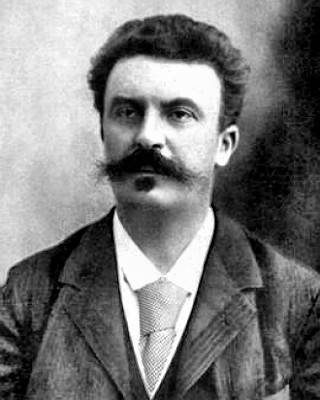 Guy de Maupassant (1850 - 1893) was a French author.
His literary career was limited to a decade (1880 - 1890) before he went insane and died in a psychiatric hospital following eighteen months of almost complete unconsciousness. He left an immense impact on literature, including six novels and over three hundred short stories. Maupassant was one of the most famed French novelists in the world, both in film and in television. There are more than 130 adaptations of his work on TV and cinema since the film The Son's Return directed in 1909 by DW Griffith until the film collection Chez Maupassant presented by Eurochannel.
The short story that made him known, Boule de Suif, famous worldwide, has been adapted in the film Stage Coach directed by John Ford in 1939, starring John Wayne and in other movies directed by Robert Wise in 1944 and Christian Jaque in 1945. His short story A Day in the Country was adapted for film by Jean Renoir in 1936, his novel Pierre and Jean by Luis Buñuel in 1952, and his short story La Femme de Paul by Jean-Luc Godard in 1966.
The main themes he deals with in his stories are:
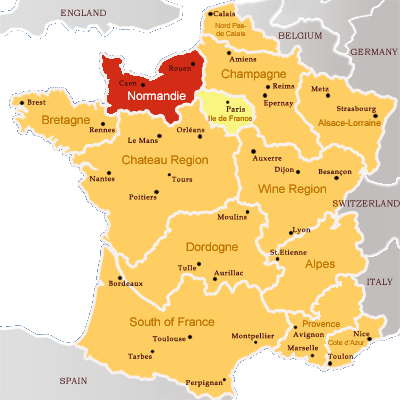 -Normandy.
Normandy is a region in northern France that borders the English Channel and is at the mouth of the Seine. It is also the birthplace of Maupassant. It holds a very important place in his work and since it serves as a backdrop to many of his stories, both the country and the coast’s major cities such as Rouen and Le Havre, and been inspired descriptions as in the short story Miss Harriet, but more importantly, its people. Farmers or the upper-class and their stories, often villainous as in The Little Cask, provide Maupassant with the main inspiration for his work.
- The German occupation of France after the defeat of Sedan in 1871.
The Franco-Prussian War brought conflict from 1870 to 1871 to the Second French Empire under the aegis of Napoleon III and the German kingdoms united behind Bismarck in the Kingdom of Prussia. It ended with the defeat of the French and the fall of the French Empire. The German occupation provided the framework of the short story Boule de Suif, Mademoiselle Fifi, and Deux Amis.
- Women, which Maupassant was quite familiar with.
He died due to syphilis contracted during his youth.
-Pessimism, madness, depression and paranoia.
Maupassant died insane, after several suicide attempts. We can talk about the fact he had some family predispositions because of his depressed mother and the fact that his brother also died insane. The short story Miss Harriet begins with these eloquent words: "Fools attract me ..."
Maupassant is also a disciple of the German philosopher Arthur Schopenhauer (1788 - 1860), famous for having brought pessimism to the level of a philosophical doctrine. Schopenhauer is "the greatest dream crusher to ever exist on earth”. Maupassant shared in his pessimism, saying “human kind is a beast just above the others” and "God is ignorant of what he does”.
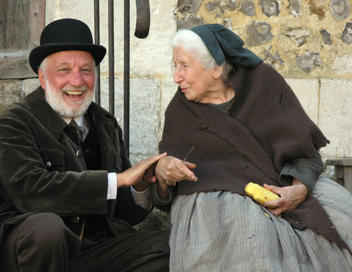 - The fantastic, as in his famous short story The Horla.
Aesthetically, Maupassant defined himself by opposing to the two main literary trends of his time, romanticism and naturalism.
Romanticism was a literary movement that reached its apogee in France in the mid-nineteenth century, whose most prominent representative was author Victor Hugo (1802 - 1885).
Naturalism is a literary movement born in the era of Maupassant, which reached its zenith in the late nineteenth century, and whose most prominent figures are writers Gustave Flaubert (1821 - 1880) (who will guide the early literary career of Maupassant) and Emile Zola (1840 - 1902).
As a naturalist, Maupassant adhered to the ideal of a novel being realistic and objective, describing reality as it is and not exalted and poeticized as it would be with the romantics. He also rejected the idea of total realism like Zola, favoring a more personal vision of the world. We can define his work as "personal realism." His work still captures our imaginations because of its realistic strength, density and his unique style.