|
|
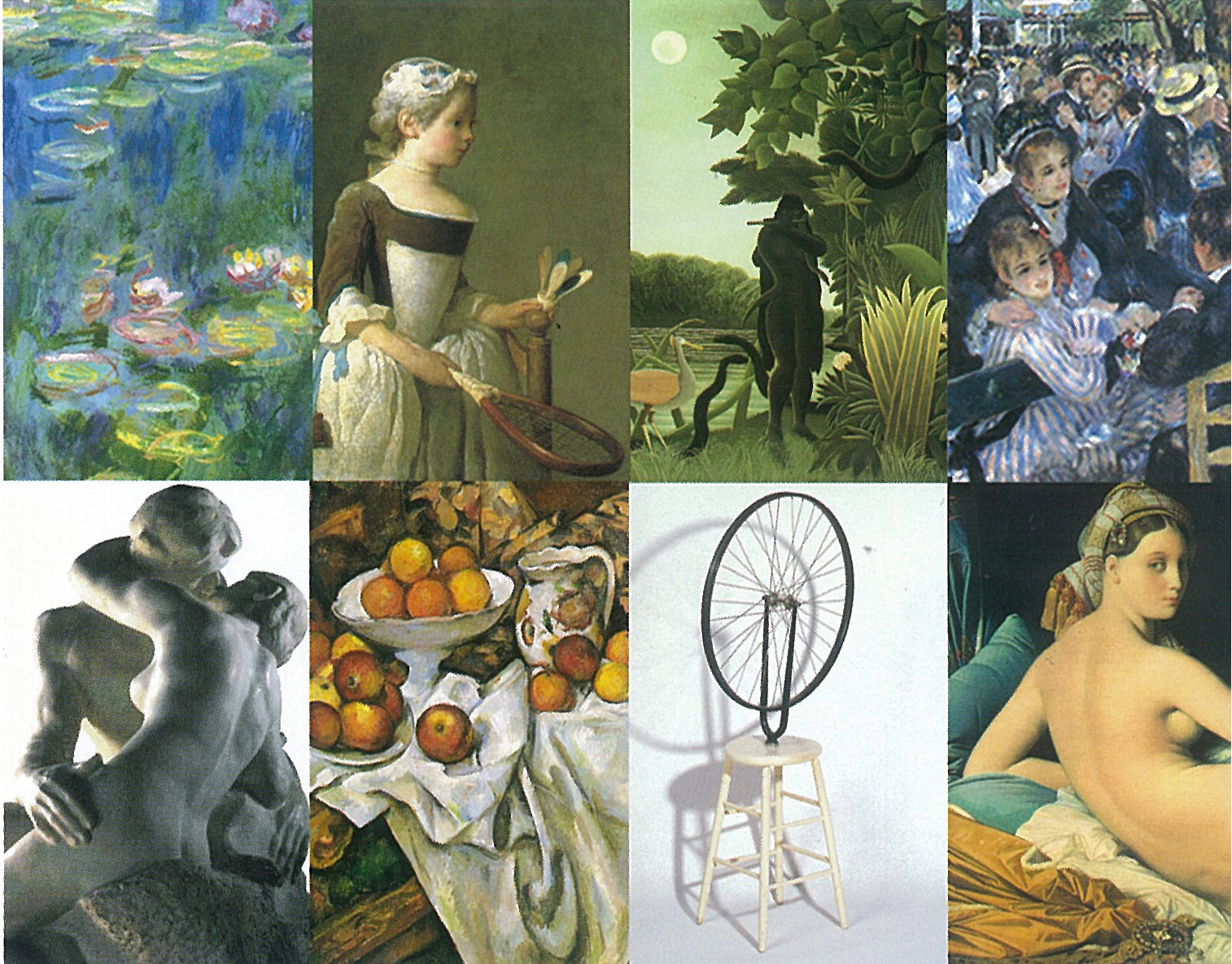
Collection Artists lets you discover the great masters of painting and sculpture: Bruegel, Chardin, Goya, Ingres, Cezanne, Monet, Renoir, Rodin, Rousseau, Duchamp and Picabia. Each film traces, without ever being anecdotal, the life and the entire works of an artist by taking interest in the evolution of his art and in the significant turning points of his career. This collection is intended for all those who want to understand the works but also the motivations, the ambitions and the vocation of these artists that can’t be ignored. Francis Picabia Francis Picabia was a well-known painter and poet. He got involved in the Dada movement in the beginning of the 20th century, before breaking away from it after developing an interest in Surrealist art. In 1925, he returned to figurative painting. Henri Rousseau Henri Julien Félix Rousseau was a French Post-Impressionist painter in the Naive or Primitive manner. He is also known as Le Douanier (the customs officer) after his place of employment. Ridiculed during his life, he came to be recognized as a self-taught genius whose works are of high artistic quality. Siméon Chardin Chardin was born in Paris, the son of a cabinetmaker, and rarely left the city. He lived on Saint-Sulpice, until 1757, when Louis XV granted him a studio and living quarters in the Louvre. In 1752 Chardin was granted a pension of 500 livres by Louis XV. At the Salon of 1759 he exhibited nine paintings; it was the first Salon to be commented upon by Denis Diderot, who would prove to be a great admirer and public champion of Chardin's work. Beginning in 1761, his responsibilities on behalf of the Salon, simultaneously arranging the exhibitions and acting as treasurer, resulted in a diminution of productivity in painting, and the showing of 'replicas' of previous works. In 1763 his services to the Académie were acknowledged with an extra 200 livres in pension. In 1765 he was unanimously elected associate member of the Académie des Sciences, Belles-Lettres et Arts of Rouen, but there is no evidence that he left Paris to accept the honor. By 1770 Chardin was the 'Premiere peintre du roi', and his pension of 1,400 livres was the highest in the Academy. In 1772 Chardin's son, also a painter, drowned in Venice, a probable suicide. The artist's last known oil painting was dated 1776; his final Salon participation was in 1779, and featured several pastel studies. Gravely ill by November of that year, he died in Paris on December 6, at the age of 80. Paul Cézanne Paul Cézanne (1839-1906) is certainly as great an artist as any that ever lived, up there with Titian, Michelangelo, and Rembrandt. Like Manet and Degas, and also Morisot and Cassatt, he came from a wealthy family -- his was in Aix-en-Provence, France. His banker father seems to have been an uncultivated man, of whom his highly nervous and inhibited son was afraid. Despite parental displeasure, Cézanne persevered with his passionate desire to become an artist. His early paintings display little of the majesty of his late work, though today they are rightfully awarded the respect that he certainly never received for them. Cézanne was in his twenties when he painted The Artist's Father. Wonderful though it is, with its blacks and greys and umbers, it does not fully indicate the profundity of his developing genius. Yet even in this early work, Cézanne's grasp of form and solid pictorial structures which came to dominate his mature style are already essential components. His overriding concern with form and structure set him apart from the Impressionists from the start, and he was to maintain this solitary position, carving out his unique pictorial language. Auguste Rodin Auguste Rodin (1840-1917) was a French artist, most famous as a sculptor. He was the preeminent French sculptor of his time, and remains one of the few sculptors widely recognized outside the visual arts community. Pieter Bruegel Pieter Bruegel the Elder (1525-1569) was a Dutch Renaissance painter and printmaker known for his landscapes and peasant scenes. He is nicknamed 'Peasant Bruegel' to distinguish him from other members of the Brueghel dynasty, but is also the one generally meant when the context does not make clear which "Bruegel" is being referred to. From 1559 he dropped the 'h' from his name and started signing his paintings as Bruegel. Jean-Auguste-Dominique Ingres The French painter Ingres, the son of an unsuccessful painter and sculptor, was born at Montauban. After an early academic training in the Toulouse academy he went to Paris in 1796 and entered the studio of the neoclassical painter Jacques Louis David in 1797 and won the Prix de Rome in 1801. From 1806 to 1820 he painted in Rome, where he developed his extraordinary gifts for drawing and design. He was greatly influenced by the work of Raphael, and his style has been described as doubly inspired by Raphael and David. |