|
Return to Lady Mercedes
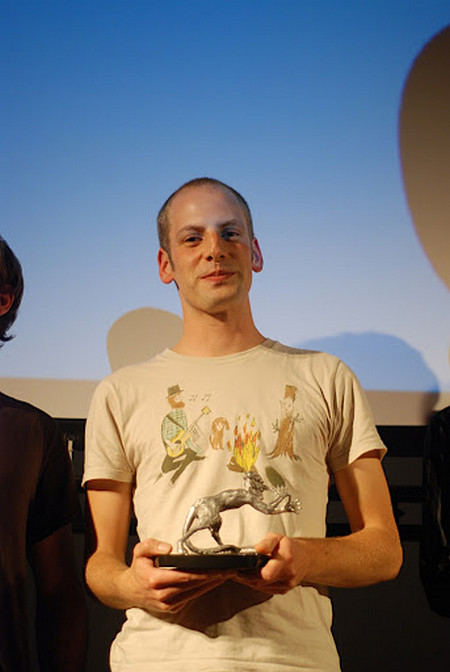
Interview with David Fonjallaz (Director)
How did you come up with the idea of making a documentary about a prostitute?
The Bernese journalist Simon Jäggi suggested making a film about Sylvia Leiser (Lady Mercedes). He had already written an article in a local newspaper about her and came to the conclusion that a mere article couldn't do justice to her personality and her story. Simon Jäggi worked as co-director on the film and did the interviews with her for the film.
In general, we think that investigating the margins of this society and giving to its members an opportunity to express themselves is the best way to get to know and understand it. In that respect, prostitution is an interesting topic to deal with. It takes place in a social environment which is - despised as it is - a reality. To study prostitution means bringing the ethics of a society to light as well as its moral double standard.
Why choose Lady Mercedes amongst all prostitutes in Bern?
Lady Mercedes represents an old-fashioned kind of prostitution, she has been working for 35 years in her car as a prostitute, and therefore through her story, we were able to tell about the mutation which took place in this business in the last decades. Furthermore, Sylvia Leiser leads a very ordinary life, far more ordinary than one might think. It allows us to discuss and reveal how unsteady our classifications and stereotypes are.
Does the film go beyond the story of Lady Mercedes?
Sylvia Leiser's life story includes a lot of stories. It is about prostitution in Switzerland and about social change, about coming to terms with growing old in a business which, in fact, calls for young, neat and blooming bodies. It treats of sexuality and the complex balance between carnal and emotional needs.
By making this portrait we tried to come to Lady Mercedes' daily life as authentically as possible. It is the ordinary life, the normal life, the unexpected banality of the sex business which aroused our interest. And, of course, the inward aspect of prostitution, how the persons feel. We were interested in the impressions of a sex worker who, on account of her work, got accustomed to hiding her emotions behind the protective mask of makeup, and routine language.
How did the public and critics receive the documentary? Did you get negative criticism for promoting prostitution?
The film was very well received by both public and critics in Switzerland and also abroad, where it was screened. What makes us especially happy is the fact that it's still being shown regularly in various contexts, from cinema special screenings to theme-related events.
We didn't get negative feedback per se, but we had many interesting and sometimes controversial discussions with the audience about prostitution in general, which - hopefully - helped to break down some of the stereotypes many people have about prostitutes. We were also very happy that Lady Mercedes liked the film very much and was very committed to promoting it.
Are you working on any film projects at the moment? Can you tell us something about them?
With our production company, Lomotion, we work on different projects right now as producers. Last year, we released the medium-length documentary Work Hard, Play Hard by Marcel Wyss, a film about two cocaine addicts in Switzerland. Right now we are working on an unconventional portrait of Kurt Gossenreiter. It is a road movie in which we plan to go by boat from Switzerland to the North Sea, a film that will hopefully become an inspiring plea for an uncompromising life.
Return to Lady Mercedes
|