|
Return to Awakening of a Dream 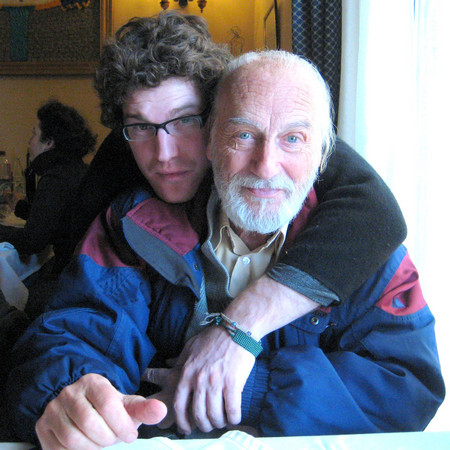
Interview with Freddy Mas Franqueza (director)
How did you come up with the idea of Awakening of a Dream?
It was from the distress and emptiness left after the death of my grandfather. I was in Berlin studying filming and the loneliness I felt didn't have answer. It was like a burning pain. The lack of words to understand made me start to write a small story. I was lucky that Wim Wenders, Hans- Joachim Schlegel and Jutta Brückner, my tutors, were interested and gave me enough confidence to work by my side and make of it a feature film. I guess that it's been a beautiful homage to him.
How much of your personal experiences can we find in the film?
My grandfather -played by Héctor Alterio, whose look and life attitude is very similar to my grandfather's – sowed on me a personal universe that made me discover emotions to give sense to my life. I spent my childhood in the store where the grandfather of the film works, and the relationship with my mother is very similar to the one depicted in the movie, even today.
What did you find more challenging during the filming process?
It was to make the image truthful, poetic and sincere. That truthfulness was created by the photography director Carles Gusi. The poetry was given by the camera movements and positioning, planed to create a rhyme in the narration; the moment Marcel is abandoned by his mother is the same in which he finds his home empty 12 years later. I tried to create those narrative repetitions along the film to give the sensation that life is like the water that falls from the clouds and gets back to them.The sound was also a very challenging aspect, trying to make it the protagonist of the sound spectrum, as I've lived the characters feelings in silence. 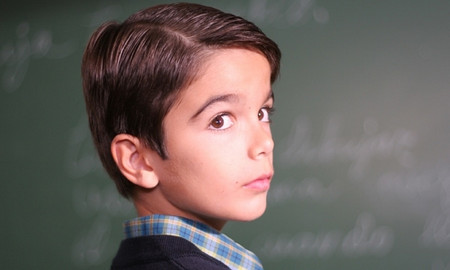
How easy or difficult is to start filming in Spain? Can filmmakers find funding easily?
I studied at Universität der Künste in Berlin and began to work in filming there. My project was born in that city and the production percentage there (about the 20%) wasn't difficult due the support of Wim Wenders and Jutta Brückner. When I went to Spain to get the Spanish production part, because the movie had to be filmed there, problems came up... I was too young; the project was too personal and so on. Between 2008 and 2009, the movie was the second Spanish film more present in the official selections of the FIAPF Film Festivals. It was in 17 countries and won 9 awards. The lesson I learned was to believe in myself.
What do you think that differences and characterizes Spanish cinema from European cinema?
I think there are a lot of talent but less inversion and respect than in the rest of Europe. If we look at the facts: budgets, incentives, cultural policies, promotion and protection, it's obvious that cinema is not considered as a cultural asset further than the big four names who started filming in the 80s. Lot of people lack all sorts of support in all its aspects.
Are you working on any filming project at the moment?
Currently I'm working in Second Lives, Second Chances, a futuristic action thriller for the US and Mexico; Last Moment, a moving drama for Germany and France; and Formentera, an intense love story for Italy and Spain.
Return to Awakening of a Dream
|