|
|
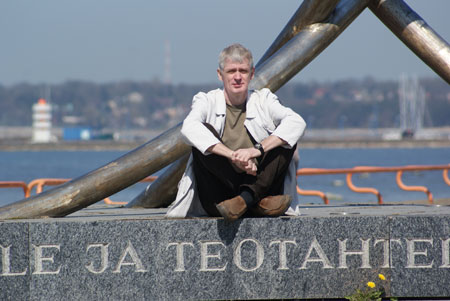
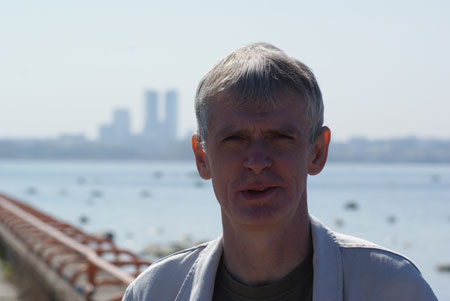
Interview with Villu Kangur and Gert Kiiler (Scriptwriters) How did you get involved in the project? Villu Kangur: From 2005 to 2007 we wrote a TV comedy show in Estonia with Gert Kiiler. It had 46 episodes altogether. And when this show ended both of us had a wish to keep working together. Although we both wrote other TV projects at the time, we had achieved an exceptional understanding of each other during that previous work. And then Gert came up with an idea that seemed quite crazy at first. Gert Kiiler: I was on a skiing holiday and I was sitting in my hotel room after a long day when I saw That 70’s Show on TV. Since I was looking for an idea for a new TV series myself, it suddenly hit me – why not make something like this about the 1980s in Estonia? First, it was a completely undiscovered ground, because in Soviet times we didn’t have shows like these here. It’s also quite different from the free West of that time. And on the other hand – being born in 1974, I really love the 1980s. Why this idea of doing a series about communist Estonia? V. K.: I remember that it took us quite some time to convince our producers – the Soviet times have been more of a burden for the Estonians, and we have tried to forget that era as quickly as possible. But when a small nation cannot laugh at themselves, it is doomed. Those times were sad, but even during the most totalitarian of regimes you cannot lose your sense of humor. G. K.: The Soviet regime was like a sieve that tried to separate all the good from the bad. But it turned out the opposite way. As it almost always did in the Soviet Union. Where do you draw inspiration from for the scripts of the series? V. K.: Since Gert is 17 years younger than me, it works out perfectly for us. We can contain each other’s fantasies superbly. I can often use personal memories, because by that time I had gone from a late hippie to an actor working in a state theater. Gert was happily going through his punk period. By the way, we have both worked in theater and as journalists, so we have the ability to make generalizations based on real events from these times and portray them through humor. G. K.: As for showing the characteristics of the Soviet times, it naturally comes from my own experiences and those of people I know. But all this wouldn’t work without the core of universal human relationships that don’t care about the times or the regime. How close to reality in the Estonia of the 80s is the series? V. K.: It’s not our aim to give our viewers a history lesson. But we try to be as precise as we can in details. So even if something didn’t actually happen exactly how we portray it on the show, you know that it might as well have. We’re simply telling the story of a 1980s Soviet family through a sitcom. The craziest thing is that when we simply let our imagination fly, viewers say that it actually was exactly like this. But when we have sometimes used a true story from the past, we’ve been told: come on, life wasn’t that stupid back then! G. K.: Topics and attitudes are quite similar to real life back then. At least that’s how we see it. We simply exaggerate everything – like you do in a comedy. And we don’t hold back much. For how many seasons will the series keep entertaining its viewers? V. K.: Right now we are writing the scenario for the 7th season. So far 53 episodes have aired. We started shooting again already in March and Estonian Public Broadcasting have ordered 16 new episodes until the end of this year. If all goes well, we should reach about 100 episodes, so we’re only about halfway there. Since it’s just us two writing, the job is huge. G. K.: Obviously, we want to reach the 20th of August, 1991, with the last episode – the day when Estonia regained its independence. At the moment we’re in 1985, when Gorbachev came to power in the Soviet Union – this was the beginning of a rapidly moving and often quite moronic era of changes. So history itself presents us with plenty of absurd moments. |