|
|
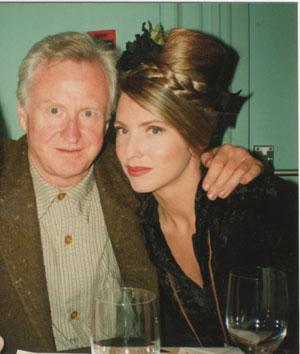
John Boorman, the Last Quixotic British filmmaker He started a career in the film industry by mere luck. Describing the process in an interview with the British newspaper The Guardian, he said, “My career was quite accidental, in a way. When I came out of the army I got a job as a trainee film editor. I thought I could be very happy being a film editor for the rest of my life. But then I moved to Southern Television, and there, as a director-editor, I was directing short films; and then I was running this daily programme there.” John Boorman’s life has been as fascinating as his entrance to filmmaking. Born in Shepperton, Middlesex, England on January 18, 1933, he was educated at the Salesian School in Chertsey, in Surrey. After his national service and a spell in dry-cleaning, Boorman progressed from journalism into television, eventually becoming the head of the BBC's Bristol-based Documentary Unit in 1962. His first feature film, while still at the BBC, was called The Quarry, which had some documentary elements in it but was fundamentally a drama film; it was really what got him launched. From then on, Boorman started getting offers to do features. “I never had a huge ambition to be a film director or anything, I just found myself doing it,” reflected the director in the same interview. However, Catch Us If You Can (1965) is considered his debut. The film was praised by the mainstream critics after its opening in the US, and people started sending him scripts and offers from America, which led to Boorman’s first great venture: Point Black (1967). |

|
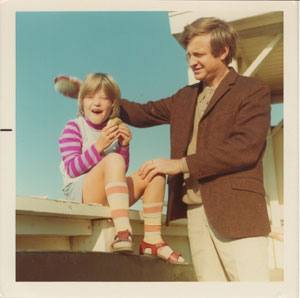
His efforts to make mind-blowing productions led him to become a casualty during some of his productions. As in a quixotic adventure, he got coral poisoning while filming Hell in the Pacific (1968), and contracted “valley fever” from studio grit on the visionary, trance-like Exorcist II: The Heretic (1977). Among Boorman’s key film productions are Deliverance (1972), adapted from a pulp novel by James Dickey; Excalibur (1981), a version of the Arthurian legend, based on Le Morte D'Arthur; and Hope and Glory (1987), a rather autobiographical movie retelling his childhood in London during The Blitz. One of his career’s highlights are the preparations to film a version of The Lord of The Rings in the early 1970s. However, the production proved too costly for the time, and the project was put aside. John Boorman has remained active as of 2014, when he released Queen and Country, the sequel to his 1987 Oscar-nominated Hope and Glory. The movie was selected to be screened as part of the Directors' Fortnight section of the 2014 Cannes Film Festival. |
|
|