
|
|
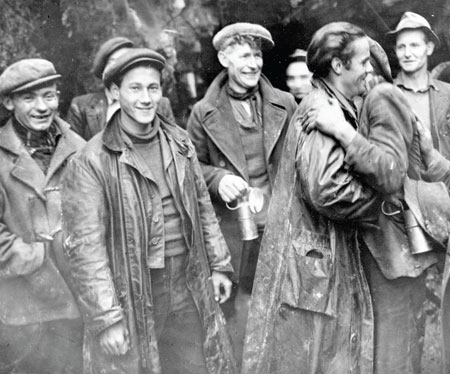
The Irish Diaspora: A Path for Success They represent an important part of the Irish community and have been part of the biggest-ever migration movement in modern history. Numbering between 70 and 80 million, members of the Irish Diaspora represent a larger population than Ireland has ever had. But what are the reasons for such levels of migration? Who were those adventurers? Did they succeed abroad? The story begins — for most historians — during the Great Famine that affected the country between 1845 and 1849. During those days, the poorest people in the country had become heavily dependent on the potato as a food source, but the Irish potato crop was ruined by a fungal disease, commonly called "potato blight." Almost overnight, Ireland was plunged into a state of desperation. There were other food sources, of course, but the poor could not afford to buy them. Some experts on the Irish Diaspora and history often call the event genocide, because the country had other food sources, some of which were even exported to Britain, which were denied to the Irish poor in order to further British political interests and power in Ireland. This trigger event caused millions of Irishmen to flee, mainly to Great Britain and America; however, others settled in Australia, New Zealand, Argentina, Mexico, France and Brazil. Thus, by 1890 two of every five Irish-born people were living abroad. But migrations did not stop with the end of the famine. By the end of the century the population of Ireland was almost halved, and it has never regained its pre-famine level. From the foundation of the Irish Free State in 1922 until the 1970s, another 1.5 million people left Ireland; the majority traveled across in the late 1940s to take part in the reconstruction of Britain after WWI. |

|
Among the terms used to refer to those Irish-born men in Britain is “navvy,” which relates to those sailors and builders who went to Great Britain to build the canal, road and rail networks in the nineteenth century. The term “Plastic Paddy” is also used to refer to Irish migrants but in a pejorative way, and has also been applied to those with no ancestral connection to Ireland or who claim Irish identity or nationality. Throughout history, many Irish descendants have been of paramount importance for their achievements abroad. Among them is William Brown, the most famous Irish citizen in Argentina. He was creator of the Argentine Navy and leader of the Argentine Armed Forces in the wars against Brazil and Spain. Another Irish hero in Latin America was the Wexfordman William Lamport, better known to most Mexicans as Guillen de Lampart, precursor of the Independence movement and author of the first proclamation of independence in the New World. The influence of the Irish Diaspora can be also seen in sports. In Scotland, two of the country’s main football teams were funded by or because of Irishmen. Celtic was created with the support of the Irish community in the East End of Glasgow, and Dundee Unite, inspired by the example of Hibernians in Edinburgh, the Irish Catholic community, was a team founded in 1875 by Irishmen from the Cowgate area of Edinburgh. |
|
|