|
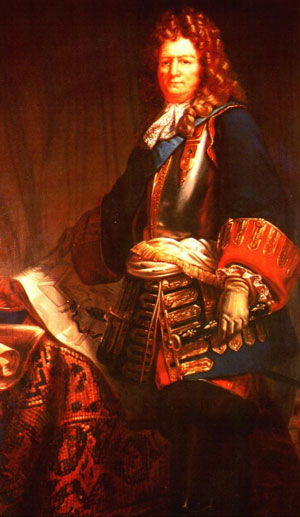
Vauban |
The Man Behind the King Sun Every king has a court and a selected group of aides to make of his kingdom the best. In the 17th century, the world’s greatest superpower, France, had in its ruler, Louis XIV, the Sun King, a man of grandeur and vision . . . but there was someone else behind him. He is not famous as Louis’ liege “king” outside France’s borders, but his endeavors are worthy of recognition. Sébastien Le Prestre de Vauban, commonly known as just Vauban, was an eminent personality. Marshal of France and the foremost military engineer of his era, Vauban was also famous for his skill in both designing fortifications and breaking through them, gaining territories and building architectural masterpieces for his king. Vauban was born in 1633 at Saint-Léger-de-Foucherets, France (now Saint-Léger-Vauban), to a family of the minor nobility. The natural career for him at the time was the army, and he enlisted as a cadet in the militia of Prince Condé, who was a rebel fighting against France. He quickly distinguished himself in several siege actions - both in defense and in attack – but was captured by royal troops in 1653. Soon after, Vauban was converted into a devoted servant of the king by the kindness of Cardinal Mazarin, and started an illustrious career. First, he took part in the siege of Sainte-Menehould and won a lieutenancy in the regiment of Burgundy, and in 1654 he besieged and took his own first fortress. |
|
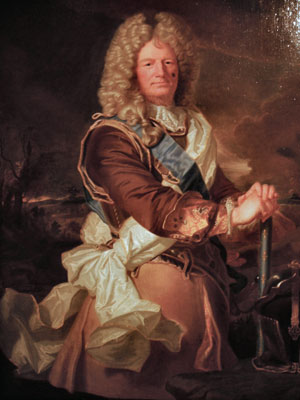
His constant success in war as an engineer led him to become Commissary General of Fortifications. After the war in the Spanish Netherlands, his new duties included inspecting existing fortifications all over France, and identifying new sites to be fortified. He became a trusted advisor of the king and worked closely with Louvois, Louis XIV's war minister. Between 1672 and 1679, Louis XIV went to war with the Dutch. This period saw Vauban go from success to success, leading many sieges and capturing Maastricht using a special new tactic called parallel trenches, which was adopted throughout Europe and was still in use over a century later. In 1676 he was promoted to Maréchal-de-camp. After the Dutch War, Vauban again set to work fortifying the new conquests and securing France's frontiers. He advised Louis XIV to use some fortresses captured from the enemy as bargaining counters and to make the frontier run in an advantageous way, in contrast to the popular “grabbing as much land as possible” policy of the time. Vauban designed several fortresses during this time including Strasbourg, Luxembourg, and Landau. By 1701, Vauban's health was beginning to decline as he neared the end of his life. In 1703 he was made a Maréchal of France, but was recalled from service later that year. In his retirement he wrote a treatise on fortification and siege warfare, which was reproduced in many different European languages and used for many years to come. In 1707 he published a controversial paper condemning the French government's unfair tax system and proposed a better system. His reforms were rejected by the king, and Vauban died shortly afterwards, in 1707. |
|
|